
1.1 Algorithm and flowcharting
1.2 Types of programming languages
1.3 History of C language
1.4 Advantages of C language
1.5 Structure of a C program
1.6 Character set
1.7 Identifiers
1.8 Keywords
1.9 Constants and variables
1.10 Symbolic constants
1.11 Qualifiers
1.12 Type conversion
1.13 Operators and expressions
2.1 Formatted I/O: scanf(), printf()
2.2 Unformatted I/O: getch(), getchar(), gets(), putch(), putchar(), puts()
2.3 Branching statements:
if
if-else
Conditional operator (? :)
Nested if
switch
2.4 Looping statements:
while
do-while
for
Comma operator
goto
break
continue
Nested loops
3.1 Arrays: Declaration and initialization of
One-dimensional array
Two-dimensional array
3.2 Structures:
Definition and declaration
Initialization
Array of structures
Nested structures
3.3 Union
3.4 Pointers: Declaration, initialization, and pointer arithmetic
4.1 Definition of function
4.2 Function prototype
4.3 Categories of functions
4.4 Actual argument and formal argument
4.5 Function calling methods:
Call by value
Call by reference
4.6 Function parameters
4.7 Local and global variables
4.8 Functions with arrays
4.9 Recursion
4.10 strlen()
4.11 strcpy()
4.12 strcmp()
4.13 strcat()
On competition of the following syllabus the students will be able to -
1. Understand the Programming concepts.
2. Understand development of C language.
3. Write Algorithms for the task/problem.
4. Able to design flowcharts of the problem.
5. Able to write Simple C Programs.
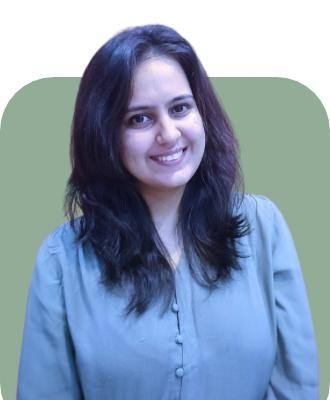
Hello! My name is Priyanka Verma and i am your computer subject instructor. I have always loved teaching in the simplest way possible so that each and every student of mine should understand. I have taught students internationally online before too for 1 year. i have completed my masters in computers from Savitribai Phule University, Pune. All my videos about computer and computer languages are simple to understand. If you have any doubts you can write it in the comments section.
BSC Semester 2 Computer Science (NEP)
No Review found